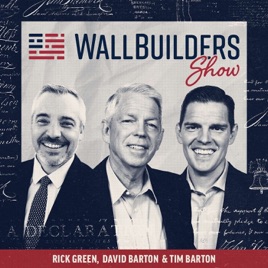
Advertise on podcast: The WallBuilders Show
Rating
4.8from
This podcast has
1043 episodes
Language
EnglishExplicit
No
Date created
2010/08/15
Latest episode
2026/10/15
Average duration
27 min.
Release period
2 days
Description
The WallBuilders Show is a daily journey to examine today's issues from a Biblical, Historical and Constitutional perspective. Featured guests include elected officials, experts, activists, authors, and commentators.
Unlock The WallBuilders Show podcast Email contact info,
Listeners & Audience details
Email contact information
Direct podcast contact details

Listeners
Audience numbers & engagement insights

Audience details
Podcast Insights

Podcast episodes
Check latest episodes from The WallBuilders Show podcast
Who Gets To Rewrite Your Rules Of Government
2026/10/15
A state constitutional convention can sound like a clean reset button, but it can also become the biggest political gamble voters never meant to take. We dig into Michigan’s ballot question and explain why some states are required to periodically ask voters whether they want a convention, what a convention could change, and why “opening the whole constitution” is a very different move than pursuing a focused constitutional amendment. Along the way, we talk through a simple decision filter: what exact problem are you trying to fix, and do you actually have the votes and the cultural consensus to get a good outcome?
We also clear up a common confusion for anyone tracking constitutional news: a Michigan state constitutional convention is not the same thing as an Article V Convention of States for the US Constitution. The incentives, the risks, and the potential scope are different. If your goal is good governance and durable reform, narrower tools often beat sweeping rewrites, especially in an era when activists can steer a process far beyond what voters expected.
Then we pivot to culture and civics with a review of Adventures in Odyssey “The Measure of a Patriot”. We love values driven storytelling, but we ask a fair question: when you’re marking America’s 250th anniversary, does the framing leave kids more grateful and courageous, or just more skeptical? We wrap with a practical civics question about taxpayer funded lawsuits between governments and a reminder to vote principles and agendas, not personality. Subscribe, share this with a friend, and leave a review so more people can find these biblical, historical, and constitutional conversations.
Support the show
Why Your Vote Still Matters
2026/10/14
Twenty days sounds like plenty of time until you realize how many elections get decided by a few thousand votes, sometimes less. We talk through the hard truth behind low-turnout midterm elections: when fewer people show up, your vote carries more weight, and organized groups can swing congressional districts, school boards, and statewide constitutional amendments.
We also take on the most common reasons Christians give for staying home. Politics feels dirty, the parties feel the same, and one vote feels small. We answer those objections with real numbers from toss-up districts and with a biblical lens on stewardship, accountability, and what it means to live in a nation built on “We the people.” If we really believe responsibility comes with authority, voting is not optional background noise, it is part of how we love our neighbors in practice.
Then we get practical. We run through major state ballot initiatives, including ranked choice voting, citizen-only voting rules, voter ID, protections for women’s sports, abortion amendments, and other policy questions that can shape your state constitution for decades. We also explain why third-party voting rarely changes outcomes in a two-party system and why incremental progress matters. Finally, we highlight why Senate control affects judicial confirmations and long-term court decisions.
If this conversation sharpens your thinking, subscribe, share the show with a friend, and leave a review so more people can find it.
Support the show
Vote Early With Confidence - with Doug Napier
2026/10/13
Something big is happening at the same time in America and you can feel it in the voting numbers, the church, and even in the brands people are pushing back on. We start with a practical challenge: vote early while you still can. Candidates are known, but life is not predictable, so we talk through why early voting removes last minute obstacles and how tools like ChristianVoterGuide.com and iVoterGuide help you research candidates fast and share clear voter guides with friends, family, and your church.
Then we shift to a hopeful cultural signal that didn’t get nearly enough coverage: a massive prayer gathering at AT&T Stadium with tens of thousands of people showing up to pray for repentance and revival. We unpack the difference between revival as internal change and awakening as faith that starts shaping the public square, and why noticing “good news” matters when discouragement is easy.
Finally, we bring the marketplace into the conversation with guest Doug Napier from 1792 Exchange. He explains how they track corporate bias across thousands of companies and what it looks like for a business to respect constitutional rights like free speech, free exercise, and freedom of conscience while still serving customers well. We talk corporate stewardship, the cost of ideological activism, and why the 1792 Buttonwood Agreement is a powerful reminder that trust and integrity built the American economy in the first place. If you care about faith and culture, early voting, and the future of American business, listen, share this with a friend, and leave a review so more people can find the show.
Support the show
Stop Punishing Your Own Side - with Jordan Lorence
2026/10/12
You can feel it in election season: the temptation to vote with your emotions, sit out November, or “send a message” because your candidate lost a primary. We don’t sugarcoat the stakes here. When we treat the general election like a protest, we can end up empowering policies we strongly oppose and locking in consequences that last for years through courts, appointments, and executive power.
We also bring on attorney Jordan Lorence from First Liberty Institute to walk us through why the Democratic Socialists of America has so many constitutional conservatives alarmed. The issue isn’t just labels, it’s structure. We talk about checks and balances, separation of powers, federalism, the US Senate, the Electoral College, and why an independent Supreme Court is essential for protecting constitutional rights including religious liberty. If those guardrails disappear, minority rights get crushed under pure majority rule, and history shows that “more democracy” can quickly turn into something far darker.
Along the way, we get practical about how to think clearly when you don’t love the nominee, why a senator is part of a team vote, and why a governor can reshape an entire state through leadership and appointments. If you care about the Constitution, civic engagement, and biblical citizenship in modern America, this conversation is for you. Subscribe, share this with a friend who’s tempted to sit out, leave a review, and tell us: what helps you vote strategically when you don’t like the options?
Support the show
Surprising Polls And Clear Steps For Christian Voters
2026/10/09
The headlines are trying to tell you the outcome is already decided, but the numbers we’re seeing hint at something very different. We dig into late-election reality, including a crucial correction on Idaho Proposition 1 and why ballot initiatives can quietly reshape abortion law and parental rights faster than any campaign ad can explain. If you care about pro-life policy and informed voting, this is your reminder to read the actual text and help your circle do the same.
We also react to a genuinely shocking polling headline: a Republican challenger running neck-and-neck with Oregon Governor Tina Kotek. Add in Barack Obama jumping into campaigning in Michigan and Georgia, and we ask the obvious question: why are “safe” states suddenly getting emergency attention? From pastor events to a multi-church rally in Colorado, we share what we’re seeing on the ground and why close races often come down to a few hundred votes. Christian civic engagement is not abstract; it’s showing up, bringing friends, and refusing to sit out because the media says your vote won’t matter.
Then we get practical about discernment in the social media age. We talk about research tied to Nature-style reporting that warns short-form feeds can degrade understanding over time, and why election season is exactly when 10-second clips and micro-ads can mislead the most. We point you to a free 21-day prayer guide, a live Biblical Citizenship course through Patriot Academy, and end with a culture moment we couldn’t ignore: Grok getting prompted to remove “false gods” and leaving only Jesus, then explaining why.
Subscribe for more Good News Friday momentum, share this with a friend who’s overloaded by election noise, and leave a review that tells us what topic you want next.
Support the show
How To Lead With Grace When You Are Under Attack - with Rob McCoy
2026/10/08
When your name gets dragged, your motives get questioned, and the loudest voices seem determined to misrepresent you, what does faithful leadership actually look like? Tim Barton sits down with Pastor Rob McCoy for a candid, wide-ranging finale that starts with spiritual resilience and ends with a challenge to both younger and older generations to lead with courage. We talk about how to absorb criticism without becoming cynical, how to keep a clean heart when you feel justified in being angry, and why the Beatitudes still offer a practical framework for life in the public square.
From there, we zoom out to history and the cost of conviction. Rob reflects on lessons from figures like Dietrich Bonhoeffer and Martin Niemoller, then connects those ideas to modern moments when pastors had to decide whether government orders crossed constitutional and biblical lines. We also tackle the Romans 13 debate, religious liberty, and why standing for neighbors sometimes means refusing to call tyranny “obedience.” Along the way, we come back to one of the most important leadership ideas we can practice right now: people are not the enemy; they are the opportunity, even when they are wrong.
Finally, Rob explains the vision behind the American Pastors Guild, a pastor-focused network designed to equip church leaders with serious training, strong relationships, and clear standards, without the usual ministry pitching and platform building. If you care about biblical leadership, church engagement in culture, constitutional principles, and raising up the next generation with moral clarity, you will get a lot from this conversation. Subscribe, share this with a friend or your pastor, and leave a review with your biggest takeaway.
Support the show
Why Pastors Should Teach Culture And Government - with Rob McCoy
2026/10/07
A lot of Christians have been trained to believe the Bible is “spiritual” while government and culture are “someone else’s job.” We push back on that idea with Rob McCoy as he lays out why expository preaching creates clarity, courage, and real discipleship, not just good feelings. When pastors avoid controversial moral issues, people don’t stay neutral, they get discipled anyway by the loudest voices in the culture.
We also dig into a hard question: how can churches see massive conversion growth while a place like California keeps accelerating toward social and moral collapse? Rob connects the dots between revival, awakening, and the practical public impact of biblical truth. That leads into American history, the Founders’ frequent use of Scripture, and why Deuteronomy mattered so much to the formation of a constitutional republic.
One of the most provocative moments comes from Matthew 16 and the meaning of ecclesia. Rob explains why Jesus used a term tied to a civic assembly concerned with the welfare of the community, and how that reframes the “I don’t do politics, I just preach the gospel” mindset. We also address why silence on issues like gender ideology and medical harm to minors is not compassion, and why fear-based leadership leaves the flock exposed.
Part two of this three-part conversation is direct, biblical, and practical. Subscribe so you don’t miss the conclusion, then share this with a friend and leave a review: what topic do you wish more pastors would address with clarity?
Support the show
A Pastor Can Shape A City Without Losing His Calling - with Rob McCoy
2026/10/06
A pastor who becomes a mayor sounds like a headline, but Pastor Rob McCoy treats it like a calling problem: how do you love God, love people, and still tell the truth when the public square gets hostile? Tim Barton sits down with Rob for a candid first part of a three-part conversation, tracing Rob’s unlikely path from the business world into decades of pastoral ministry at Calvary Chapel Godspeak in Thousand Oaks, California, and then into elected office.
Along the way, we talk about expository teaching, the verse-by-verse approach that refuses to “proof text” Scripture, and why that kind of Bible teaching forms deeper disciples. Rob also challenges a pattern many listeners will recognize in the American church: we emphasize evangelism but often neglect discipleship, and we’re shocked when there’s little cultural change to show for it. He connects those ideas to American history, spiritual renewal, and what it means to build durable convictions in a generation under constant pressure.
We also get the behind-the-scenes story of Rob’s friendship with Charlie Kirk, why Charlie called Rob “my pastor,” and the moment Charlie finally agreed to preach in a church and surprised everyone, including himself. If you care about biblical citizenship, Christian engagement in politics, and building faith that holds up in real life, this conversation is for you.
Subscribe so you don’t miss parts two and three, and if this helps you think more clearly, share it with a friend and leave a review.
Support the show
Ballot Initiatives You Cannot Ignore - with Michael Huffman and Byron Foxx
2026/10/05
Ballot initiatives are quietly rewriting state law while most voters are distracted by the top of the ticket. We dig into why these measures matter so much, how they bypass stalled legislatures, and why the fine print can change your community faster than any campaign promise.
We focus on Virginia as a high stakes case study with Dr. Byron Foxx and Dr. Michael Huffman, walking through three proposed constitutional amendments and why they argue every voter needs to read past the marketing labels. We talk about the “reproductive freedom” language and the concerns raised about abortion policy, parental consent, medical safeguards, and conscience protections. We also cover the broader warning: once something is embedded in a state constitution, reversing it is a long, uphill process, so the real chance to stop a bad amendment is before it passes.
Then we zoom out to the national map. From voter ID questions to keeping men out of women’s sports, from abortion rollbacks to election systems like rank choice voting, states across the country are putting major policies directly on the ballot. We share how to find trustworthy information, why turnout is everything, and how one informed voter can multiply impact by bringing friends, family, and church communities along.
If you want a biblical, historical, and constitutional perspective on what your ballot is actually doing, hit play and share this with someone who votes but never reads the propositions. Subscribe, leave a review, and send this episode to one person who needs a clearer voter guide before they head to the polls.
Support the show
Supreme Court Deportation Ruling And Signs Of Revival
2026/10/02
The news cycle trains us to expect the worst, then act surprised when we feel exhausted. We go the opposite direction with a rapid run of verified good news stories that actually change how you see the moment, from immigration enforcement and Supreme Court decisions to unmistakable signs of spiritual hunger among young adults.
We start with a headline most people have not thought through: “third country deportations.” What happens when someone is in the US illegally or commits a crime, but their home country refuses to accept them back? We break down what the policy is, why federal judges tried to block it, and why the Supreme Court’s 6-3 action letting it continue (for now) matters for the rule of law, public safety, and basic accountability.
Then we pivot to the most encouraging data point we keep seeing: Gen Z is showing up as the most likely generation to identify as religious or spiritual and to engage in spiritual activities like church. We talk about why the constant stream of polling and instant information may let us recognize a revival while it is happening, and why rediscovering history and Scripture often becomes fuel for awakening. That theme of “common sense returning” shows up again in a surprising place: new student loan standards that push colleges to prove programs lead to higher earnings before taxpayers keep funding them.
We close with a story that is hard to ignore: a 137-year-old North Carolina church baptizing 458 people in a single day, with thousands gathered to celebrate. It is a win, and it is also a call to action for discipleship that shapes every part of life and culture.
Subscribe, share this with a friend, and leave a review so more people can find honest hope and practical perspective.
Support the show
Treason, Sedition, Insurrection
2026/10/01
Calling something “treason” feels satisfying when you’re angry, but it can also be the fastest way to lose the rule of law. We slow the conversation down and get specific about three words that are constantly thrown around in politics: treason, sedition, and insurrection. The surprise is how narrow treason is under the US Constitution and why the Founders insisted on it after watching Britain stretch these charges during the American Revolution.
We walk through the actual constitutional standard in Article III, then zoom out to the historical backdrop: English common law, Blackstone’s warnings about arbitrary power, and why “elastic” definitions become a tool for kings and parties alike. From there, we sort out sedition as agitation that disturbs public peace and insurrection as active resistance to executing laws, with practical examples that help separate protected First Amendment protest from conduct that turns violent.
We also connect the legal confusion to a bigger problem: education. When citizens are never taught the Constitution and lack shared moral restraints, the culture starts treating politics like war and language like a weapon. If you care about clear thinking, fair charging standards, and a healthier public square, this conversation will give you better categories and better questions.
Subscribe, share this with a friend who argues politics online, and leave a review so more people can find the show. What do you think is the most abused label today: treason, sedition, or insurrection?
Support the show
Homeschooling And Parental Rights In America - with Mike Farris
2026/09/30
Homeschooling didn’t become normal in America because the culture got nicer. It became normal because families and attorneys fought for parental rights when educating your own kids could trigger investigations, court battles, or worse. We sit down with constitutional attorney Mike Farris to answer a listener’s real-life tension: how do you honor biblical teaching about submission to authority while still protecting your children and doing what you believe God calls you to do, especially when the law feels intrusive or hostile?
We dig into Romans 13 with a crucial distinction that changes everything: “authority” isn’t automatically whatever an official says. In the United States, the highest civil authority is the Constitution, and government actors don’t get to invent powers that were never granted. From there, we walk through practical, on-the-ground homeschooling realities, including when simple notification rules are reasonable to follow and when regulations turn into unconstitutional control over curriculum, religious conviction, or parental decision-making. We also point you to tools that help families who move often, including military families trying to keep up with different state homeschool laws.
Then the conversation widens into free speech and religious liberty as Mike explains his current work challenging the Johnson Amendment and what a court ruling could mean for pastors speaking about candidates during worship services. We close with powerful historical context from the American founding, including Jonathan Mayhew’s famous sermon on “unlimited submission” and why the fight over authority, conscience, and tyranny never really goes away.
If this helped you think more clearly about homeschooling, parental rights, or biblical citizenship, subscribe, share the episode with a friend, and leave a review so more people can find the show.
Support the show
Faithful On The Wall - with Rudy Atallah
2026/09/29
Some of the most important work in America is happening in ordinary churches, with leaders who decide they’re done sitting on the sidelines. We’re recording from opposite ends of the country, one of us in Washington, DC walking pastors through the spiritual heritage of the US Capitol, and another in Washington State encouraging pastors who feel beat down by a culture that keeps getting darker. The thread tying it together is stewardship: we don’t just get to complain about the moment we’re in, we get to be part of the solution.
We also dig into a tough but necessary topic: religious persecution. We talk through real-world numbers on Christian persecution and why it’s so easy for media narratives and even AI tools to blur categories by mixing “harassment” with lethal violence and forced displacement. If we want clarity on religious freedom, we have to be honest about definitions, sources, and what’s actually happening on the ground.
Then we’re joined by Rudy Atallah from The Blessing Projects (BlessingProjects.org), a faith-based nonprofit doing high-impact humanitarian aid for persecuted Christians in places like Lebanon, Syria, Iraq, and parts of Africa. Rudy explains why “rescue” is only part of the story and how stability is often the real protection: bakeries to keep food local, clean water when wells are poisoned, chicken farms that create sustainable protein, and even simple solar lights that stop predators and protect livelihoods. We talk about what effective giving looks like when overhead stays low and results stay measurable.
If you care about courageous leadership, Christian persecution, religious liberty, or practical ways to help, this conversation will challenge and equip you. Subscribe, share this with a friend, and leave a review so more people can find the show.
Support the show
Parental Rights On Trial - with Kelly Shackelford
2026/09/28
A state law can tell you nothing about where your minor child is and still call it “policy.” That’s the heart of the parental rights fight we tackle today, and it’s why we’re sounding the alarm for families who care about education transparency, child welfare, and constitutional limits on government power. We connect the dots between the early homeschooling legal battles and the new reality where some leaders openly act as if kids belong to “all of us” instead of their parents.
Kelly Shackelford from First Liberty Institute joins us with a major Supreme Court case out of Washington State. The law generally requires shelters to notify parents when a runaway minor shows up, but it carves out an exception if the child is seeking gender modification and the parent disagrees. We unpack why the lower courts claimed parents lacked standing, why that “wait until someone is harmed” approach is so dangerous, and how a Supreme Court precedent here could reshape parental rights across the entire country.
We also talk about what this looks like in schools right now, including a California case involving gender ideology content, parent notification, and religious exemptions. Along the way, we bring it back to the practical levers listeners control: voter turnout, state ballot initiatives, school board accountability, and the judges confirmed through elections that decide these questions for decades.
If you care about parental rights, religious liberty, and keeping the Constitution real in daily life, listen, share this with a friend, and subscribe. If the conversation helps you, leave a review so more families can find it.
Support the show
Economic Gains And Policy Wins You Probably Missed
2026/09/25
Median household income hits a 58-year high and child poverty hits a record low, yet most people never hear the numbers. We start with that disconnect and talk honestly about why personal financial pain can still be real even when national data shows improvement, and how voters should weigh both lived experience and hard statistics when the economy dominates election season.
From there, we move into big policy developments that tie directly to immigration enforcement and government spending. We break down the DOJ’s shift on Temporary Assistance for Needy Families reporting, why states may now face new obligations, and what supporters see as a commonsense transparency move to protect taxpayer dollars and reinforce border law. We also look at ICE arrests staying near record highs and what changes when local law enforcement is allowed to cooperate more directly.
We then tackle media accountability and the growing use of lawsuits as a weapon in politics. Even when cases lose, we discuss why a public figure might keep filing, what “lawfare” does to public trust, and how the high defamation standard for public figures shapes the press landscape. Finally, we share two education stories that surprised even us, including a New York ruling on pride flags in classrooms and a Tennessee teacher who pushed back on reading same-sex marriage books to first graders.
If you care about faith and culture, constitutional limits, public school battles, and election consequences, this conversation connects the dots. Subscribe, share with a friend, and leave a review, then tell us what part of the good news you think the media is missing most.
Links for Good News Stories:
In historic shift, DOJ rules all states with federal welfare programs must report illegal immigrants
https://justthenews.com/government/federal-agencies/doj-clarifies-state-reporting-requirements-illegal-migrants-federal-aid
ICE Arrests Stay Near Record High With 50,000 in August
https://www.newsmax.com/us/ice-immigration-arrests/2026/09/01/id/1267979/
Gay math teacher challenges NY district's ban on Pride flags and stickers — court issues stunning ruling
https://www.theblaze.com/news/gay-math-teacher-pride-flag
Christian teacher refused to read LGBT book to first-graders — now the school is pulling the books
https://thedailybs.com/2026/09/01/christian-teacher-refused-to-read-lgbt-book-to-first-graders-now-the-school-is-pulling-the-books/
Support the show
Podcast reviews
Read The WallBuilders Show podcast reviews
G-Shick 2026/10/05
Love It
Fantastic show. Fantastic analysis and content. Love it. Keep it up 🇺🇸🇺🇸
Value plus more 2026/10/05
Transcript
Thank you for returning them
Victor Crockett 2026/10/05
Great Show
Amen!! Love Your Podcasts Guys!! What You preach/teach helps me on my daily walk with the Lord! Thank You!! I’m still requesting prayers for my E...
minnie theodosia 2026/08/22
Thankful for you all Three
So so glad I found you! What a treasure of truth and true American history explicitly giving the Christian foundation from whence we come and exhortin...
Tcarn4jc 2026/06/17
Unable to listen to
I have been listening to your podcast for several years. Over the last 3 days it says that podcast is temporarily unavailable and I am unable to liste...
Anonymous_Scholar 2026/05/10
LEGIT! MUST LISTEN
After careful consideration and research, this podcast and organization create a deep dive into the exploration of America's founding and what factors...
KynCaraBai 2026/04/16
Reforming from within
I'm so glad they addressed the 'Jefferson Bible' our assistant pastor was talking about it I was tried to explain the truth to one of my sisters but t...
Jgcguihvfh 2026/03/03
Preserving judicial independence…
Excellent show!
I think better than term limits for the Supreme Court would be a mandatory age of retirement. This would in fact work for all of Cong...
KKohut 2026/01/10
Great content..however
The information presented is great.
I stopped listening awhile back due to my frustration with Tims constantly rambling on and repeating himself reduc...
Emmybbabe 2025/10/17
Phenomenal
Thank you wallbuilders for all that you do. True truth speakers in a world of lies. I only wish the episodes were longer - so much good stuff, so litt...
Podcast sponsorship advertising
Start advertising on The WallBuilders Show relevant audience podcasts
You may also like to advertise on these Podcasts
4.518767374
American Scandal
Audible

4.689331209
Get Sleepy: Sleep meditation and stories
Slumber Studios

4.79026375
Life is Short with Justin Long
Audible
4.714107348
Bad Friends
Bobby Lee & Andrew Santino

4.7126170
10 to Life
Annie Elise

4.76755462
Criminology
Emash Digital & Mike Ferguson, Mike Morford
4.87501973
The Dr. John Delony Show
Ramsey Network

4.512577662
RedHanded
RedHanded
4.959762000
Legal AF by MeidasTouch
MeidasTouch Network
4.9247711442
Unashamed with the Robertson Family
Tread Lively