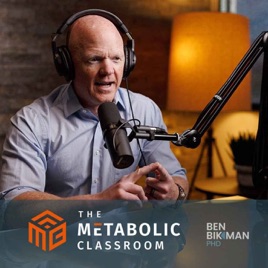
Advertise on podcast: The Metabolic Classroom with Dr. Ben Bikman
Rating
4.9from
This podcast has
165 episodes
Language
EnglishPublisher
Insulin IQExplicit
No
Date created
2021/02/16
Latest episode
2026/10/05
Average duration
28 min.
Release period
10 days
Description
Welcome to The Metabolic Classroom, a nutrition and lifestyle podcast focused on metabolism, which is how our bodies use energy, and the truth behind why we get sick and fat. Every week, Dr. Ben Bikman shares valuable insights that you can apply in your own life and share with friends and loved ones. The Metabolic Classroom is brought to you by BenBikman.com and InsulinIQ.com. Hosted on Acast. See acast.com/privacy for more information.
Unlock The Metabolic Classroom with Dr. Ben Bikman podcast Email contact info,
Listeners & Audience details
Email contact information
Direct podcast contact details

Listeners
Audience numbers & engagement insights

Audience details
Podcast Insights


Podcast episodes
Check latest episodes from The Metabolic Classroom with Dr. Ben Bikman podcast
Why Micronized Progesterone Is Different
2026/10/05
Question? 📢 Ask Dr. Bikman’s Digital Mind (multilingual):
https://benbikman.com/ben-bikmans-digital-ai-mind
📢 Dr. Bikman’s Community & Coaching Site: https://insuliniq.com
Dr. Bikman explains why micronized progesterone should not be confused with the synthetic progestins historically used in many hormone therapies. Micronized progesterone is chemically identical to the hormone produced naturally by a woman’s ovaries, while synthetic progestins can also activate cortisol- or testosterone-related receptors, potentially affecting insulin sensitivity, blood lipids, and other aspects of metabolic health.
Ben reviews clinical evidence showing that micronized progesterone can effectively protect the uterine lining when estrogen is used while preserving more of estrogen’s favorable metabolic effects. Oral micronized progesterone is also converted into allopregnanolone, which enhances the brain’s calming GABA signaling and may improve sleep. Better sleep itself can support insulin sensitivity, while progesterone may also reduce hot flashes and night sweats that interfere with sleep.
The safety evidence is also encouraging. Compared with some synthetic progestins, micronized progesterone appears more favorable with respect to blood clots, breast cancer risk, and metabolic markers. Ben’s overall conclusion is that for women using menopausal hormone therapy who need progesterone to protect the uterus, micronized progesterone appears to be a metabolically favorable partner to estrogen.
References:
For complete show notes and references, we invite you to become an Insider subscriber. You’ll enjoy real-time, livestream Metabolic Classroom access which includes live Q&A with Ben after the lecture, unlimited access to Dr. Bikman’s Digital Mind, ad-free podcast episodes, show notes and references, and Ben’s Weekly Research Review Podcast. Learn more: https://www.benbikman.com
NOTE: The information presented is not intended to be a substitute for professional medical advice, diagnosis, or treatment. Dr. Bikman is not a clinician—and, he is not your doctor. Always seek the advice of your own qualified health providers with questions you may have regarding medical conditions.
Hosted on Acast. See acast.com/privacy for more information.
Can Your Body Make More GLP-1 Naturally?
2026/09/21
Question?
📢 Ask Dr. Bikman’s Digital Mind (multilingual):
https://benbikman.com/ben-bikmans-digital-ai-mind
📢 Dr. Bikman’s Community & Coaching Site: https://insuliniq.com
Summary:
Dr. Bikman explains why some people may produce an inadequate GLP-1 response and how insulin resistance could be part of the problem. Because intestinal L cells have insulin receptors, chronically elevated insulin can make these cells insulin resistant, reducing their ability to release GLP-1 and potentially creating a cycle of faster stomach emptying, higher glucose, more insulin, and further impairment of the natural GLP-1 response.
Ben uses this physiology to explain how he believes GLP-1 medications should be used: not simply to produce maximum weight loss, but as a temporary window in which carbohydrate cravings become easier to control. Rather than escalating automatically to the highest tolerated dose, he favors using the lowest dose that makes refined carbohydrates easier to resist while still requiring the person to exercise some choice and discipline. During that window, the goal is to establish meals centered on protein, healthy fats, and whole foods while improving sleep and resistance training.
Ben also addresses concerns about lean-mass loss, explaining that body-composition scans can classify losses of water, glycogen, organ fat, and even the non-fat portion of adipose tissue as “lean mass.” Ultimately, he argues that GLP-1 therapy should have an exit strategy: improve insulin sensitivity, restore the body's own GLP-1 signaling as much as possible, establish sustainable habits, and then work with a clinician to gradually reduce the medication rather than assuming it must be permanent.
References:
For complete show notes and references, we invite you to become an Insider subscriber. You’ll enjoy real-time, livestream Metabolic Classroom access which includes live Q&A with Ben after the lecture, unlimited access to Dr. Bikman’s Digital Mind, ad-free podcast episodes, show notes and references, and Ben’s Weekly Research Review Podcast. Learn more: https://www.benbikman.com
Hosted on Acast. See acast.com/privacy for more information.
What Your Glucose Monitor Is Missing
2026/09/14
Question?
📢 Ask Dr. Bikman’s Digital Mind (multilingual):
https://benbikman.com/ben-bikmans-digital-ai-mind
📢 Dr. Bikman’s Community & Coaching Site: https://insuliniq.com
Topic:
Continuous glucose monitoring shows how the body handles glucose, but it cannot reveal how much insulin was required to produce that glucose response. By continuously measuring ketones alongside glucose, the new dual sensor may provide an indirect window into insulin activity, fat burning, and metabolic flexibility while also helping people with diabetes detect dangerous ketone elevations earlier.
Summary:
Dr. Ben Bikman explores a new wearable that continuously measures both glucose and ketones. Unlike a traditional continuous glucose monitor, Abbott’s Libre Duo can track beta-hydroxybutyrate (BHB) alongside glucose, providing another window into what is happening metabolically. For people with diabetes, continuous ketone monitoring could provide earlier warning of dangerous ketoacidosis, particularly in people with type 1 diabetes or those using SGLT2 inhibitors.
Ben explains why ketones provide information that glucose alone cannot. Because insulin strongly suppresses fat release, fat oxidation, and ketone production, changes in ketones can serve as an indirect indicator of insulin activity. A seemingly normal glucose response can therefore hide the fact that the body required a large amount of insulin to produce it, while watching glucose and ketones together may reveal more about how readily the body transitions between glucose and fat metabolism.
Ben sees potential value beyond diabetes as well. During fasting or carbohydrate restriction, glucose would generally fall while ketones rise; after a carbohydrate-rich meal, the opposite occurs. Tracking both signals continuously could therefore offer a more complete picture of metabolic flexibility and help people better understand their individual responses to food, fasting, and other metabolic changes.
References:
For complete show notes and references, we invite you to become an Insider subscriber. You’ll enjoy real-time, livestream Metabolic Classroom access which includes live Q&A with Ben after the lecture, unlimited access to Dr. Bikman’s Digital Mind, ad-free podcast episodes, show notes and references, and Ben’s Weekly Research Review Podcast. Learn more: https://www.benbikman.com
Also, Dr. Bikman’s Digital Mind can interact with you in many languages: https://benbikman.com/ben-bikmans-digital-ai-mind
NOTE: The information presented is not intended to be a substitute for professional medical advice, diagnosis, or treatment. Dr. Bikman is not a clinician—and, he is not your doctor. Always seek the advice of your own qualified health providers with questions you may have regarding medical conditions.
Hosted on Acast. See acast.com/privacy for more information.
The New GLP-1 Pills & What You Need to Know
2026/09/08
Question?
📢 Ask Dr. Bikman’s Digital Mind (multilingual):
https://benbikman.com/ben-bikmans-digital-ai-mind
📢 Dr. Bikman’s Community & Coaching Site: https://insuliniq.com
In today’s mini-lecture, Dr. Ben Bikman explains the new generation of oral GLP-1 medications and why two drugs that come as pills can work very differently. Oral semaglutide is still a peptide, so it requires a special absorption enhancer to protect it from digestion and help it cross the stomach lining. Even then, only about 1% of the dose reaches the bloodstream, requiring strict instructions about taking it on an empty stomach. Orforglipron, by contrast, is a small molecule rather than a peptide, allowing it to survive digestion and be absorbed much more efficiently without the same restrictions.
Ben reviews studies comparing the drugs for blood glucose control, weight loss, side effects, and maintaining weight loss after injectable GLP-1 therapy. But he emphasizes that changing the delivery method does not change the underlying metabolic rules: insulin still governs whether fat is stored or released.
Most importantly, Ben argues that GLP-1 medications should be viewed as an opportunity to change metabolic habits rather than simply as long-term weight-loss drugs. Because they can temporarily reduce cravings for sweets and refined carbohydrates, he believes that window should be used to reduce those foods, emphasize protein and fat, and develop habits that can eventually provide an “off-ramp” from the medication..
References:
For complete show notes and references, we invite you to become an Insider subscriber. You’ll enjoy real-time, livestream Metabolic Classroom access which includes live Q&A with Ben after the lecture, unlimited access to Dr. Bikman’s Digital Mind, ad-free podcast episodes, show notes and references, and Ben’s Weekly Research Review Podcast. Learn more: https://www.benbikman.com
NOTE: The information presented is not intended to be a substitute for professional medical advice, diagnosis, or treatment. Dr. Bikman is not a clinician—and, he is not your doctor. Always seek the advice of your own qualified health providers with questions you may have regarding medical conditions.
#GLP1 #GLP1Medications #OralGLP1 #Orforglipron #Semaglutide #WeightLoss #InsulinResistance #Insulin #MetabolicHealth #WeightLossMedication #GLP1WeightLoss #CarbCravings #BloodSugar #Type2Diabetes #Metabolism #LowCarb #DrBenBikman #MetabolicClassroom #MetabolismMatters #HealthScience
Hosted on Acast. See acast.com/privacy for more information.
Why Your Body Chooses Sugar Over Fat
2026/08/24
Question?
📢 Ask Dr. Bikman’s Digital Mind (multilingual):
https://benbikman.com/ben-bikmans-digital-ai-mind
📢 Dr. Bikman’s Community & Coaching Site: https://insuliniq.com
Topic:
Insulin is one of the body’s most important signals for determining whether you burn glucose or fat: when insulin rises, fat release and fat burning fall, while lower insulin allows stored fat to become available for fuel. This helps explain why reducing carbohydrates can dramatically increase fat oxidation even without changing the body’s basic ability to burn fat.
Summary:
In this mini-lecture Ben explains what determines whether the body burns glucose or fat for energy. He begins with the Randle cycle, also called the glucose-fatty acid cycle, which describes how these two fuels compete with one another. But Ben emphasizes that simply having fat available does not mean the body will burn it. Insulin plays a major role in deciding which fuel gets used.
When insulin rises after eating carbohydrates, it suppresses the release of stored fat from fat cells and also makes it harder for long-chain fatty acids to enter the mitochondria to be burned. As a result, the body shifts toward burning glucose. When insulin falls, stored fat becomes available again and can more readily enter the mitochondria for energy.
Ben reviews human studies showing that carbohydrate restriction can dramatically increase fat oxidation, including research in endurance athletes who became highly efficient fat burners without sacrificing performance or muscle glycogen. He also explains what happens with insulin resistance: insulin can remain high enough to block fat burning in muscle while insulin-resistant fat cells continue releasing fatty acids, creating a metabolic mismatch that promotes fat accumulation in places such as the liver and muscle.
The central takeaway is that fuel selection is not simply about calories or which fuel happens to be available. Insulin strongly regulates whether stored fat can be released and burned, which is why lowering carbohydrate intake can dramatically increase the body’s ability to use fat for fuel.
References:
For complete show notes and references, we invite you to become an Insider subscriber. You’ll enjoy real-time, livestream Metabolic Classroom access which includes live Q&A with Ben after the lecture, unlimited access to Dr. Bikman’s Digital Mind, ad-free podcast episodes, show notes and references, and Ben’s Weekly Research Review Podcast. Learn more: https://www.benbikman.com
NOTE: The information presented is not intended to be a substitute for professional medical advice, diagnosis, or treatment. Dr. Bikman is not a clinician—and, he is not your doctor. Always seek the advice of your own qualified health providers with questions you may have regarding medical conditions.
Hosted on Acast. See acast.com/privacy for more information.
The Biggest Myth About Mitochondrial Health
2026/08/17
Question?
📢 Ask Dr. Bikman’s Digital Mind (multilingual):
https://benbikman.com/ben-bikmans-digital-ai-mind
📢 Dr. Bikman’s Community & Coaching Site: https://insuliniq.com
Topic:
Mitochondria often struggle in insulin resistance not because they are broken, but because there are fewer of them trying to process too much incoming fuel. Exercise and improved metabolic health remain the most effective ways to build healthier mitochondria, while supplements may provide additional—but smaller—benefits.
Summary:
In this mini-lecture, Ben explains why mitochondria have become one of the most talked-about topics in health while separating scientific evidence from popular hype. He begins by reviewing how mitochondria convert the energy stored in carbohydrates, fats, and ketones into ATP, the usable energy that powers virtually every function in the body. Along the way, he explains concepts such as glycolysis, the Krebs cycle, the electron transport system, coupling versus uncoupling, and the production of reactive oxygen species.
Ben then examines what happens in insulin resistance and type 2 diabetes. Rather than concluding that mitochondria are "broken," he explains that the evidence points to a different problem: people with insulin resistance generally have fewer mitochondria, more fragmented mitochondrial networks, and an excessive fuel load. As glucose and fatty acids arrive faster than the mitochondria can process them, byproducts such as lactate and acylcarnitines begin to accumulate, signaling a mismatch between fuel supply and mitochondrial capacity.
The lecture also reviews current approaches to measuring mitochondrial health, including fasting lactate, the lactate-to-pyruvate ratio, and newer biomarkers such as GDF15 and FGF21. Dr. Bikman discusses several popular mitochondrial interventions—including methylene blue, urolithin A, CoQ10, red-light therapy, and cold exposure—highlighting where human evidence is promising and where it remains limited.
The central message is that no supplement outperforms the fundamentals. Exercise consistently increases mitochondrial number and function while improving insulin sensitivity, and lowering carbohydrate intake reduces the fuel burden placed on mitochondria. Together, these strategies address the root problem more effectively than relying on supplements alone.
References:
For complete show notes and references, we invite you to become an Insider subscriber. You’ll enjoy real-time, livestream Metabolic Classroom access which includes live Q&A with Ben after the lecture, unlimited access to Dr. Bikman’s Digital Mind, ad-free podcast episodes, show notes and references, and Ben’s Weekly Research Review Podcast. Learn more: https://www.benbikman.com
NOTE: The information presented is not intended to be a substitute for professional medical advice, diagnosis, or treatment. Dr. Bikman is not a clinician—and, he is not your doctor. Always seek the advice of your own qualified health providers with questions you may have regarding medical conditions.
#Mitochondria #MitochondrialHealth #InsulinResistance #MetabolicHealth #ExerciseScience #ATP #CellBiology #Type2Diabetes #OxidativeStress #Lactate #Ketones #CoQ10 #UrolithinA #RedLightTherapy #ColdExposure #DrBenBikman #MetabolicClassroom #Metabolism #HealthScience #LowCarbScience
Hosted on Acast. See acast.com/privacy for more information.
Why Exercise Alone Won’t Help You Lose Weight
2026/08/10
📢 Ask Dr. Bikman’s Digital Mind (multilingual):
https://benbikman.com/ben-bikmans-digital-ai-mind
📢 Dr. Bikman’s Community & Coaching Site: https://insuliniq.com
Ben challenges one of the most common beliefs about exercise—that its primary purpose is to help people lose weight. While exercise certainly burns calories, he explains that the body quickly adapts by reducing energy expenditure elsewhere and, in many people, increasing appetite. As a result, the amount of weight lost is often much less than simple calorie calculations would predict.
Dr. Bikman explains that these adaptations do not mean exercise is ineffective. Instead, they reveal that body weight is the wrong outcome to focus on. Exercise dramatically improves insulin sensitivity, allowing contracting muscles to pull glucose out of the bloodstream without requiring insulin. It also increases the number of glucose transporters in muscle, improves mitochondrial function, reduces dangerous visceral fat, and helps preserve or build muscle mass.
The lecture concludes by emphasizing that the greatest benefits of exercise have little to do with the number on the scale. Strength, fitness, muscle mass, and insulin sensitivity are all far better predictors of long-term health and longevity. Dr. Bikman’s message is simple: exercise to become stronger and healthier, and eat wisely if your goal is to become leaner.
Disclaimer: The information presented is not intended to be a substitute for professional medical advice, diagnosis, or treatment. Dr. Bikman is not a clinician—and, he is not your doctor. Always seek the advice of your own qualified health providers with questions you may have regarding your medical conditions.
Hosted on Acast. See acast.com/privacy for more information.
Why Some People Stay Thin No Matter What They Eat
2026/07/27
📢 Ask Dr. Bikman’s Digital Mind (multilingual):
https://benbikman.com/ben-bikmans-digital-ai-mind
📢 Dr. Bikman’s Community & Coaching Site: https://insuliniq.com
Topic:
Some people stay lean because they burn more fat in muscle, move more without realizing it, or naturally expend more energy throughout the day. Others only appear lean because they store fat inside the liver and around the organs, making metabolic health far more important than appearance alone.
Summary:
Dr. Bikman explores a common question: Why do some people seem to eat whatever they want and never gain weight? He explains that there isn't one simple answer. Instead, several different metabolic processes can produce the same outward appearance of being lean, even though the underlying health may be very different.
The first explanation is fuel partitioning. After a meal, dietary fat can either be stored in fat tissue or burned by muscle. Which tissue "claims" that fat is heavily influenced by the enzyme lipoprotein lipase (LPL), whose activity is regulated by insulin. People whose muscles are better at taking up and burning fat tend to store less of it. Exercise training also shifts LPL activity toward muscle, while inactivity shifts it back toward fat storage.
A second explanation is that some people unconsciously burn off excess calories through everyday movement. Research shows that fidgeting, standing, pacing, and other non-exercise activity can account for hundreds of calories each day, creating enormous differences in fat gain between people eating similar amounts of food. Genetics also appear to influence these natural tendencies.
Finally, Dr. Bikman explains that some lean people are not avoiding fat storage at all—they're simply storing fat where it can't be seen. Instead of accumulating under the skin, fat may build up around the organs or inside the liver, pancreas, and muscle, increasing metabolic risk despite a normal body weight. The takeaway is that appearance alone cannot determine metabolic health. Blood markers such as fasting insulin and the triglyceride-to-HDL ratio provide a much better picture than body weight or BMI alone.
References:
For complete show notes and references, we invite you to become an Insider subscriber. You’ll enjoy real-time, livestream Metabolic Classroom access which includes live Q&A with Ben after the lecture, unlimited access to Dr. Bikman’s Digital Mind, ad-free podcast episodes, show notes and references, and Ben’s Weekly Research Review Podcast. Learn more: https://www.benbikman.com
NOTE: The information presented is not intended to be a substitute for professional medical advice, diagnosis, or treatment. Dr. Bikman is not a clinician—and, he is not your doctor. Always seek the advice of your own qualified health providers with questions you may have regarding medical conditions.
#WeightLoss #MetabolicHealth #FatStorage #InsulinResistance #LPL #LipoproteinLipase #VisceralFat #FattyLiver #PersonalFatThreshold #Metabolism #ThinOutsideFatInside #ExerciseScience #BodyFat #LowCarbScience #DrBenBikman #MetabolicClassroom #MetabolismMatters #HealthScience #Insulin #FuelPartitioning
Ben’s favorite yerba mate and fiber: https://ufeelgreat.com/usa/en/c/1BA884
Exogenous ketones: A high-quality option is the NSF-certified goBHB from Clean Form Nutrition, where you can use the code BEN10 for a 10% discount: https://cleanformnutrition.com/products/go-bhb
Ben’s favorite meal-replacement shake: https://gethlth.com (discount: BEN10)
Hosted on Acast. See acast.com/privacy for more information.
Why You're Always Hungry (Even After Eating)
2026/07/13
📢 Ask Dr. Bikman’s Digital Mind (multilingual):
https://benbikman.com/ben-bikmans-digital-ai-mind
📢 Dr. Bikman’s Community & Coaching Site: https://insuliniq.com
Dr. Ben Bikman explains why constant hunger is often driven by hormones rather than a lack of willpower. He begins by showing how meals high in rapidly digested carbohydrates can trigger large insulin spikes, causing fuel to move quickly out of the bloodstream and into storage. Even though the body has plenty of stored energy, the brain senses that available fuel has dropped and responds by making you feel hungry again.
Ben then explores three key hormones that regulate fullness: GLP-1, leptin, and insulin. Some people produce less GLP-1 after carbohydrate-rich meals, while others become resistant to leptin and insulin in the brain, weakening the signals that normally reduce appetite and cravings.
The takeaway is that persistent hunger is often a signaling problem rather than simply a discipline problem. By lowering chronic insulin levels and improving insulin sensitivity, the body's natural hunger and fullness signals can begin working the way they were designed to.
References:
For complete show notes and references, we invite you to become an Insider subscriber. You’ll enjoy real-time, livestream Metabolic Classroom access which includes live Q&A with Ben after the lecture, unlimited access to Dr. Bikman’s Digital Mind, ad-free podcast episodes, show notes and references, and Ben’s Weekly Research Review Podcast. Learn more: https://www.benbikman.com
NOTE: The information presented is not intended to be a substitute for professional medical advice, diagnosis, or treatment. Dr. Bikman is not a clinician—and, he is not your doctor. Always seek the advice of your own qualified health providers with questions you may have regarding medical conditions.
Hosted on Acast. See acast.com/privacy for more information.
Visceral Fat - The Hidden Fat That Drives Insulin Resistance
2026/06/29
📢 Ask Dr. Bikman’s Digital Mind (multilingual):
https://benbikman.com/ben-bikmans-digital-ai-mind
📢 Dr. Bikman’s Community & Coaching Site: https://insuliniq.com
In this lecture, Dr. Ben Bikman explains why visceral fat is one of the most metabolically dangerous forms of body fat. Unlike subcutaneous fat, which sits under the skin and can be pinched, visceral fat is stored deep inside the abdomen around the organs. Its location matters because visceral fat drains directly into the liver through the portal vein, meaning the fatty acids and inflammatory signals it releases reach the liver first and at high concentration.
Dr. Bikman explains that visceral fat is especially harmful because it tends to grow through hypertrophy, meaning existing fat cells get larger rather than new smaller fat cells being created. As these fat cells enlarge, they become insulin resistant and begin leaking fatty acids even when insulin should be suppressing fat release. Those fatty acids can then accumulate in the liver, pancreas, and muscle, contributing to ectopic fat storage, fatty liver disease, and worsening insulin resistance.
The lecture also highlights how enlarged visceral fat cells can become hypoxic, or oxygen-starved, which pushes them to release inflammatory signals and recruit immune cells. This turns visceral fat into an active source of chronic low-grade inflammation. The hopeful takeaway is that visceral fat is also highly responsive to catecholamines, the hormones released during physical activity. Exercise can therefore help reduce visceral fat specifically, even when overall body weight does not change dramatically.
References:
For complete show notes and references, we invite you to become an Insider subscriber. You’ll enjoy real-time, livestream Metabolic Classroom access which includes live Q&A with Ben after the lecture, unlimited access to Dr. Bikman’s Digital Mind, ad-free podcast episodes, show notes and references, and Ben’s Weekly Research Review Podcast. Learn more: https://www.benbikman.com
NOTE: The information presented is not intended to be a substitute for professional medical advice, diagnosis, or treatment. Dr. Bikman is not a clinician—and, he is not your doctor. Always seek the advice of your own qualified health providers with questions you may have regarding medical conditions.
#VisceralFat #InsulinResistance #FattyLiver #MetabolicHealth #BellyFat #Inflammation #EctopicFat #PortalVein #ExerciseScience #Catecholamines #SubcutaneousFat #FatCells #Hypoxia #MetabolicDisease #LowCarbScience #DrBenBikman #MetabolicClassroom #MetabolismMatters #HealthScience #FatLoss
Hosted on Acast. See acast.com/privacy for more information.
Why Your Bones Affect Your Metabolism
2026/06/22
📢 Ask Dr. Bikman’s Digital Mind (multilingual):
https://benbikman.com/ben-bikmans-digital-ai-mind
📢 Dr. Bikman’s Community & Coaching Site: https://insuliniq.com
Topic:
Bone is a metabolically active organ that responds to insulin and glucose while releasing hormones that influence the pancreas, fat cells, appetite, and energy use. High glucose and insulin resistance can make bones brittle despite normal density, while resistance training, stable glucose, and good nutrition support both skeletal and metabolic health.
Summary:
Dr. Bikman explains why bone should be understood as a metabolic organ, not just structural scaffolding. Bone is living tissue that is constantly being broken down and rebuilt by opposing teams of cells, and that remodeling process requires energy, nutrients, and hormonal coordination. Far from being inert, bone responds to metabolic signals such as insulin, glucose, and leptin—and it sends signals back to the rest of the body.
Ben focuses first on insulin’s role in bone health. Insulin acts as a growth signal for bone-building cells, helping maintain bone density and structure. In type 1 diabetes, where insulin is absent, bone density and architecture suffer. In type 2 diabetes, the problem is different: bone density may look normal on a DEXA scan, but chronically high glucose can glycate collagen, making bone stiffer and more brittle. At the same time, insulin resistance weakens the bone-building signal, creating the “diabetic bone paradox,” where bones appear dense but fracture more easily.
The lecture then explores bone-derived hormones, especially osteocalcin and lipocalin-2. Osteocalcin can support insulin secretion under glucose stimulation, increase adiponectin from fat cells, improve insulin sensitivity, reduce inflammation, and promote fat burning. Lipocalin-2 travels from bone to the brain after meals and appears to help suppress appetite while also supporting glucose regulation. The practical takeaway is that metabolic health and bone health are deeply connected: stable glucose, good insulin sensitivity, vitamin K, resistance training, and weight-bearing movement all help protect the skeleton and support whole-body metabolism.
References:
For complete show notes and references, we invite you to become an Insider subscriber. You’ll enjoy real-time, livestream Metabolic Classroom access which includes live Q&A with Ben after the lecture, unlimited access to Dr. Bikman’s Digital Mind, ad-free podcast episodes, show notes and references, and Ben’s Weekly Research Review Podcast. Learn more: https://www.benbikman.com
NOTE: The information presented is not intended to be a substitute for professional medical advice, diagnosis, or treatment. Dr. Bikman is not a clinician—and, he is not your doctor. Always seek the advice of your own qualified health providers with questions you may have regarding medical conditions.
Hosted on Acast. See acast.com/privacy for more information.
Why Some People Burn More Calories Than Others
2026/06/15
📢 Ask Dr. Bikman’s Digital Mind (multilingual):
https://benbikman.com/ben-bikmans-digital-ai-mind
📢 Dr. Bikman’s Community & Coaching Site: https://insuliniq.com
In this Metabolic Classroom episode, Dr. Bikman explains mitochondrial uncoupling, a process where cells burn fuel without converting all of that energy into usable ATP. Normally, mitochondria are “coupled,” meaning fuel burning is efficiently converted into cellular energy. But when mitochondria become uncoupled, some of that fuel is released as heat instead—like revving a car engine while it’s in park.
Ben explains that this process is especially important in fat tissue. White fat is designed for energy storage and tends to be tightly coupled, while brown fat is rich in mitochondria and uncoupling proteins that burn fuel to generate heat. He then connects this physiology to insulin, showing that insulin appears to make fat-cell mitochondria more tightly coupled and efficient, lowering energy expenditure and making storage easier.
The opposite happens when insulin is low and ketones rise. Research from Dr. Bikman’s lab shows that ketones, especially beta-hydroxybutyrate, can increase mitochondrial respiration in fat cells without a matching rise in ATP production—clear evidence of uncoupling. In human fat biopsies, elevated ketones were associated with markedly higher mitochondrial respiration, suggesting that ketosis can make fat tissue more wasteful with energy.
The larger takeaway is that calories still matter, but hormones influence how efficiently those calories are stored or burned. When insulin is high, the body stores energy efficiently. When insulin is low and ketones are elevated, fat-cell mitochondria may become more uncoupled, allowing more energy to be dissipated as heat rather than stored as fat.
References:
For complete show notes and references, we invite you to become an Insider subscriber. You’ll enjoy real-time, livestream Metabolic Classroom access which includes live Q&A with Ben after the lecture, unlimited access to Dr. Bikman’s Digital Mind, ad-free podcast episodes, show notes and references, and Ben’s Weekly Research Review Podcast. Learn more: https://www.benbikman.com
NOTE: The information presented is not intended to be a substitute for professional medical advice, diagnosis, or treatment. Dr. Bikman is not a clinician—and, he is not your doctor. Always seek the advice of your own qualified health providers with questions you may have regarding medical conditions.
Hosted on Acast. See acast.com/privacy for more information.
Why Amylin May Be the Most Important Weight Loss Hormone You've Never Heard Of
2026/06/08
📢 Ask Dr. Bikman’s Digital Mind (multilingual):
https://benbikman.com/ben-bikmans-digital-ai-mind
📢 Dr. Bikman’s Community & Coaching Site: https://insuliniq.com
Topic:
Amylin is an insulin-sparing satiety hormone released with insulin that slows digestion, restrains glucagon, and helps reduce post-meal glucose spikes. New amylin-based therapies, especially when combined with GLP-1 drugs, may offer powerful weight-loss effects by restoring natural fullness signals rather than forcing insulin higher.
Summary:
In this lecture, Dr. Bikman explains amylin, a hormone released from the pancreatic beta cell alongside insulin. While insulin helps move nutrients into tissues, amylin works mainly through the brain and digestive tract to increase fullness, slow gastric emptying, restrain post-meal glucagon, and reduce blood sugar spikes without forcing insulin higher. This makes amylin an insulin-sparing hormone and a natural complement to GLP-1.
Ben explains why amylin was difficult to turn into a drug: human amylin naturally tends to misfold and form amyloid deposits in the pancreas. Protein engineering solved this problem by creating analogs that activate the amylin receptor without clumping. The first amylin-based drug, pramlintide, proved the concept by reducing appetite, slowing digestion, blunting post-meal glucose rises, and producing modest weight loss, though its short duration and nausea limited broader use.
The lecture then moves into newer amylin-based therapies, especially cagrilintide and the combination drug CagriSema, which pairs cagrilintide with semaglutide. Because amylin and GLP-1 work through overlapping but distinct brain pathways, the combination produces greater weight loss than either hormone strategy alone. The takeaway is that amylin may become one of the most important next-generation targets in metabolic medicine because it supports satiety and glucose control without driving insulin higher.
References:
For complete show notes and references, we invite you to become an Insider subscriber. You’ll enjoy real-time, livestream Metabolic Classroom access which includes live Q&A with Ben after the lecture, unlimited access to Dr. Bikman’s Digital Mind, ad-free podcast episodes, show notes and references, and Ben’s Weekly Research Review Podcast. Learn more: https://www.benbikman.com
NOTE: The information presented is not intended to be a substitute for professional medical advice, diagnosis, or treatment. Dr. Bikman is not a clinician—and, he is not your doctor. Always seek the advice of your own qualified health providers with questions you may have regarding medical conditions.
Hosted on Acast. See acast.com/privacy for more information.
Why Your Ketone Readings Don’t Match
2026/06/01
📢 Ask Dr. Bikman’s Digital Mind (multilingual):
https://benbikman.com/ben-bikmans-digital-ai-mind
📢 Dr. Bikman’s Community & Coaching Site: https://insuliniq.com
Note:
Our friends at SiBio CKM are offering a 5% discount using the code BEN5 at checkout. However, their CKM is not yet available in the United States and Canada. It is currently available in selected countries including the UK, Australia, Ireland, the Netherlands, and Germany. You can view the full list of supported countries on their website. Also, you can submit your email on their website and they will notify you when it becomes available in your region: https://www.sibiosensor.com/BEN5
Summary:
Ben explains the four major ways to measure ketones: urine strips, breath analyzers, finger-prick blood meters, and the newer continuous ketone monitor. He begins by reviewing the three ketone bodies produced during fat-based metabolism: acetoacetate, beta-hydroxybutyrate (BHB), and acetone. Each testing method measures a different ketone molecule, which explains why results often do not match across devices.
Urine strips measure acetoacetate, making them inexpensive and useful early in a ketogenic diet, but they become less reliable as the body adapts and uses ketones more efficiently. Breath analyzers measure acetone, offering a reusable and non-invasive option, but they are vulnerable to breathing technique, alcohol, environmental compounds, and imperfect correlation with blood BHB. Blood meters measure BHB directly and remain the practical gold standard for spot-checking nutritional ketosis, but they require finger pricks and costly strips.
The newest tool is the continuous ketone monitor, which measures BHB in interstitial fluid and provides hundreds of readings per day. Dr. Bikman explains that this makes it possible to see trends, overnight patterns, meal responses, supplement effects, and individual variability in a way that spot-check methods cannot capture. The practical takeaway is that continuous ketone monitoring changes the question from “What are my ketones right now?” to “How does my body respond over time?”
References:
For complete show notes and references, we invite you to become an Insider subscriber. You’ll enjoy real-time, livestream Metabolic Classroom access which includes live Q&A with Ben after the lecture, unlimited access to Dr. Bikman’s Digital Mind, ad-free podcast episodes, show notes and references, and Ben’s Weekly Research Review Podcast. Learn more: https://www.benbikman.com
NOTE: The information presented is not intended to be a substitute for professional medical advice, diagnosis, or treatment. Dr. Bikman is not a clinician—and, he is not your doctor. Always seek the advice of your own qualified health providers with questions you may have regarding medical conditions.
#Ketones #KetoneTesting #ContinuousKetoneMonitor #CKM #BetaHydroxybutyrate #BHB #Ketosis #MetabolicHealth #KetoScience #LowCarbScience #FatAdaptation #UrineKetones #BreathKetones #BloodKetones #MetabolicFlexibility #HealthTracking #DrBenBikman #MetabolicClassroom #KetogenicDiet #MetabolismMatters
Ben’s favorite yerba mate and fiber: https://ufeelgreat.com/usa/en/c/1BA884
Exogenous ketones: A high-quality option is the NSF-certified goBHB from Clean Form Nutrition, where you can use the code BEN10 for a 10% discount: https://cleanformnutrition.com/products/go-bhb
Ben’s favorite meal-replacement shake: https://gethlth.com (discount: BEN10)
Hosted on Acast. See acast.com/privacy for more information.
Why Retatrutide May Outperform GLP-1 Drugs
2026/05/25
📢 Ask Dr. Bikman’s Digital Mind (multilingual): https://benbikman.com/ben-bikmans-digital-ai-mind
📢 Dr. Bikman’s Community & Coaching Site: https://insuliniq.com
Topic:
Retatrutide activates GLP-1, GIP, and glucagon receptors, combining appetite suppression with increased energy expenditure and powerful liver fat reduction. Dr. Bikman argues that its best use is not as a permanent shortcut, but as a tool to help people regain control over food habits and eventually reduce reliance on medication.
Summary:
Dr. Ben Bikman explains retatrutide, a next-generation metabolic drug that activates three receptors at once: GLP-1, GIP, and glucagon. While semaglutide targets GLP-1 and tirzepatide targets GLP-1 plus GIP, retatrutide adds a third arm through glucagon receptor activation. This makes it distinct because GLP-1 and GIP mainly reduce food intake, while glucagon adds an energy-output effect by increasing fat oxidation, liver fat clearance, and energy expenditure.
Dr. Bikman focuses especially on glucagon because it is the novel feature of retatrutide. In the liver, glucagon stimulates fat burning, suppresses new fat production, promotes hepatic fat clearance, and increases energy expenditure through futile cycling and FGF21 signaling. Human trials show remarkable reductions in body weight and liver fat, with some studies reporting over 80% relative reductions in hepatic fat content and nearly 90% of treated participants reaching normal liver fat levels.
He also explains that glucagon receptors are not expressed on skeletal muscle, which means the drug’s glucagon arm should not directly signal muscle breakdown. Instead, the liver and fat tissue respond while muscle largely ignores the glucagon signal. The practical takeaway is that retatrutide may represent the next major step in incretin-based therapy, but Dr. Bikman emphasizes again that these drugs should ideally be used as a temporary tool—a crutch—to help people reduce cravings, relearn eating patterns, and ultimately rely less on medication over time.
References:
For complete show notes and references, we invite you to become an Insider subscriber. You’ll enjoy real-time, livestream Metabolic Classroom access which includes live Q&A with Ben after the lecture, unlimited access to Dr. Bikman’s Digital Mind, ad-free podcast episodes, show notes and references, and Ben’s Weekly Research Review Podcast. Learn more: https://www.benbikman.com
NOTE: The information presented is not intended to be a substitute for professional medical advice, diagnosis, or treatment. Dr. Bikman is not a clinician—and, he is not your doctor. Always seek the advice of your own qualified health providers with questions you may have regarding medical conditions.
Hosted on Acast. See acast.com/privacy for more information.
Podcast reviews
Read The Metabolic Classroom with Dr. Ben Bikman podcast reviews
Mandy 804 2026/10/05
Very informative for the inquisitive minds.
If you are the curious person about your body or want to know the why’s and how’s to why and how something effects your body differently and why somet...
Horst McElroy 2026/04/21
What an amazing teacher
Ben Bikman, you rock! I wish I had teachers in college as good as you, ;) keep it coming brother!
Lucca20Two 2025/09/18
Facts w/ideology
He certainly understands and can explain human metabolism well. My issue is how he chooses to present certain information, things he glosses over, and...
rpbaun 2025/09/05
Fantastic medical and biological podcast
I research in diabetes and obesity and Ben provides great info in the clinic as well as down to the molecular level. It is tough to get all of the inf...
UCChris 2025/05/03
Love your stuff
You changed the course of my journey towards health. Thank you for what you are doing.
PaulaHens 2025/03/31
Useful and a fun listen
Love this podcast. Great information and so applicable to every day life. I also love the way Dr. Bikman treats his guests. So polite.
Ale James 2025/02/17
Really like Ben Bikman explanation of Insulin Resistance
One of my favorite podcast, it has change the way I see things, I was so into it that I also got his book and it was excellent, I am halfway listening...
5578146 2024/12/31
Love this podcast!
Love this!!! Really relevant topics. Easy to understand; Dr Bikman breaks down complex issues well and takes time with explanations. Appreciate the v...
cathray2 2024/11/01
Fantastic podcast!!
Love this podcast. I don’t have a medical back ground - but the explanations in this podcast are easy to understand. I’ve listened to most of the ser...
Ruffdog113 2024/09/05
Incredible podcast.
Dr. Ben Bikman is an absolute gift to humanity. I’ve been fortunate enough to chat with him and meet him in person, and he is a wonderful human. this ...
Podcast sponsorship advertising
Start advertising on The Metabolic Classroom with Dr. Ben Bikman relevant audience podcasts
You may also like to advertise on these Podcasts

4.813252012
The Jeff Cameron Show ~ Warchant.com
Jeff Cameron Show

4.8258931492
Relatable with Allie Beth Stuckey
Blaze Podcast Network

4.8224751793
The Andrew Klavan Show
The Daily Wire

4.716492000
Morning Mindset Christian Daily Devotional Bible study and prayer
Carey Green

4.810941764
Warchant Podcasts featuring Seminole Headlines
Warchant.com

4.82762857
Dopey: On the Dark Comedy of Drug Addiction
Dave & Chris

4.890611566
Fearless with Jason Whitlock
Blaze Podcast Network

4.959792000
Legal AF by MeidasTouch
MeidasTouch Network

4.725721047
The Dana Show with Dana Loesch – Politics & Culture Commentary
Dana Loesch – Conservative Political Commentary

4.723151959
Timeless Wisdom with Dennis Prager
Salem Podcast Network